Why we are failing the next generation in technology
AI and digital systems are accelerating faster than understanding.
THE PROBLEM
Most people are taught to use and trust technology, while only a few learn how it actually works. We are creating a society that relies on powerful systems it does not understand, at the exact moment those systems are reshaping power, work, and opportunity.
By secondary school, many curious and capable students are already excluded from deep understanding — not because they lack talent or interest, but because education rarely invites them to explore how modern systems actually work.
The technology gap begins in early education.
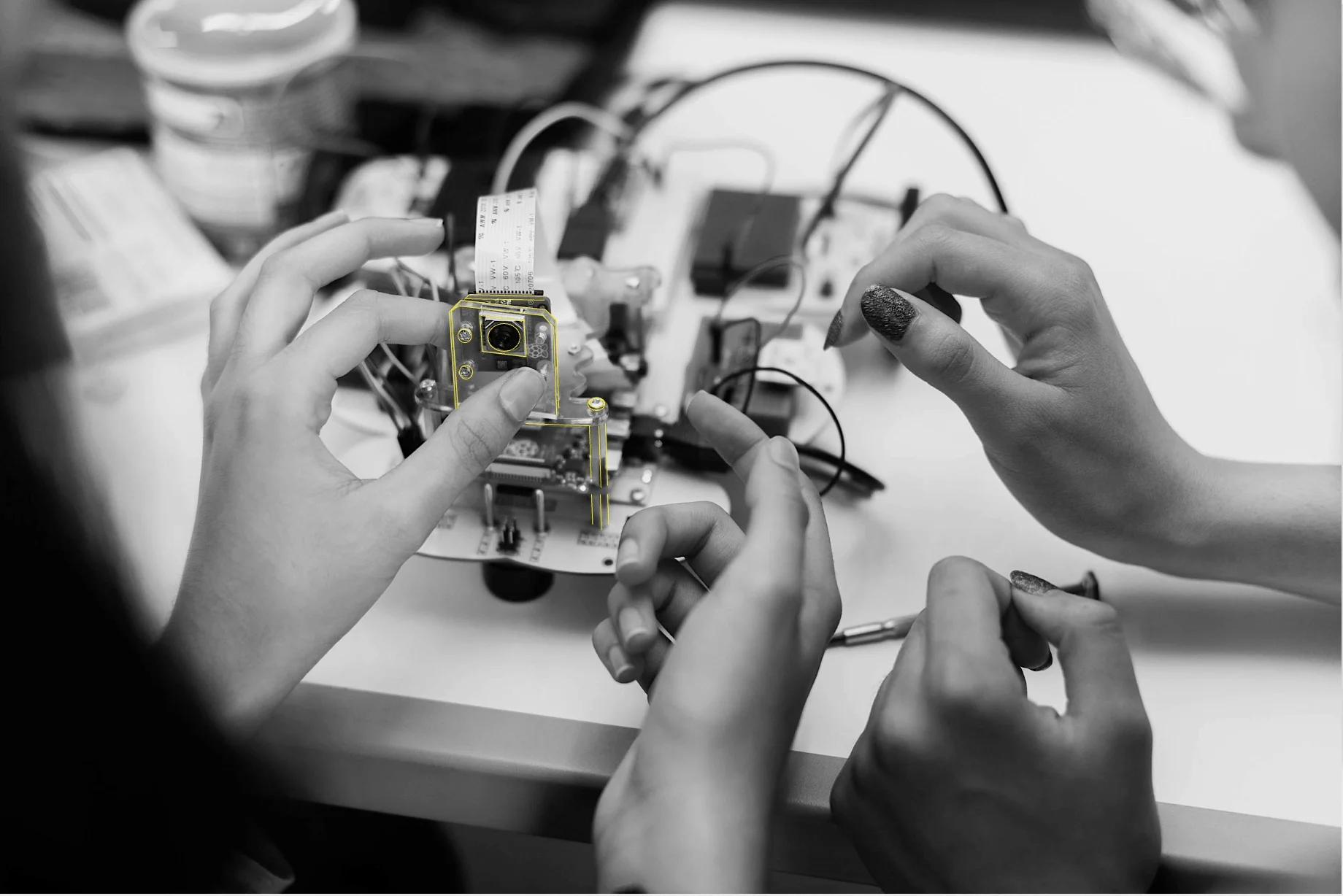
Most available courses focus on a single technology, digital tool, or predefined project. They rarely explain how different types of hardware, software, and AI systems are built, connected, and work together. Without this foundation, students struggle to move beyond surface-level projects and don’t develop the confidence to question, adapt, and design new technologies.
Understanding stops where it matters most.

Teaching technology deeper and earlier
The No Black Boxes Foundation exists to create hands-on, fully open-source courses that explain how modern technology really works — for everyone, everywhere, with no prior experience require
How we do it
We teach modern technology from first principles (e.g atoms, electrons) with every layer explained clearly and in detail. Learners build real systems step by step, rather than relying on memorised formulas or abstract definitions.
No prior experience is required, so no learner is left behind, and confidence grows quickly.
Strong foundations last longer, so learners understand how technology works at its core, and can transfer understanding across other fields.
1. Nothing is assumed, nothing is hidden.
THE SOLUTION
Most courses teach one platform, device, or piece of software at a time. No Black Boxes teaches how modern technology actually works as a connected system.
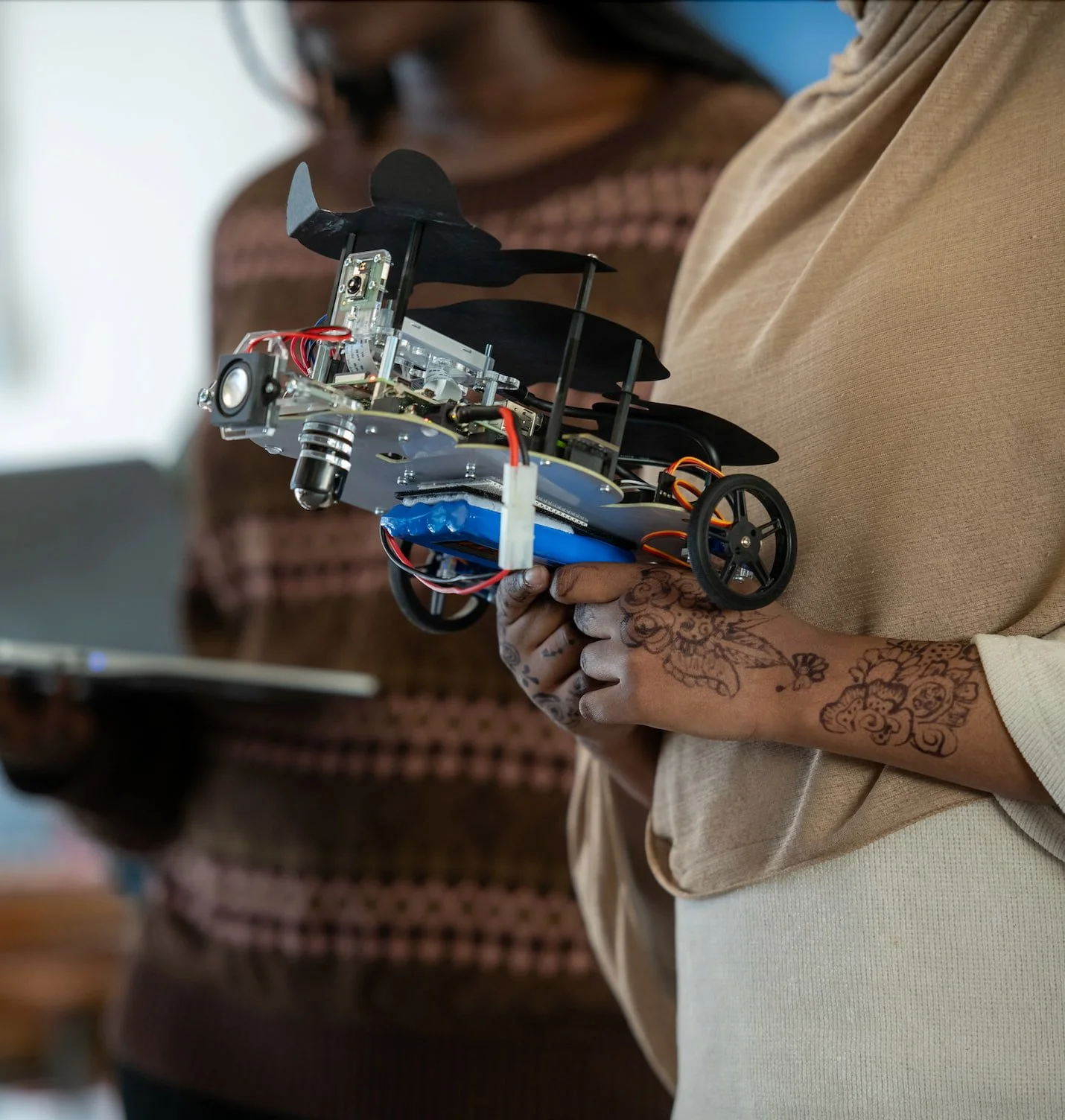
Learners work with a range of open-source technologies — from commercially available ones (Arduino, Raspberry, Google NPUs) to our custom made ones — all integrated into one coherent building journey. They can really understand how hardware, software, and AI interact, depend on one another, and form real-world technologies
2. Technology is thought of as a connected system, not tools in isolation.
We make today’s latest technologies teachable.
Designed by neuroscientists and technologists, our curriculum translates the latest advances in computing, electronics, and AI into hands-on learning for secondary school students. Learners work directly with the kinds of technologies used in research labs and emerging industries today.
This kind of early access to state-of-the-art technology is exceptionally rare, and it changes what young people believe is possible for them.
3. Giving students direct access to advanced technology.
OUR THEORY OF CHANGE
We partner with schools, universities, and educational organisations to reach young people with curiosity and potential for technology. We then provide fully funded, open-source courses that explain how modern technological systems really work — alongside recognised certificates and exposure to academic and industry pathways — so access to the future of technology is not limited by background.
WHAT WE DO

When learners understand technology from first principles, no prior knowledge is required and confidence grows quickly.
1. START WITH FOUNDATIONS

Hands-on construction turns abstract ideas into intuition, making understanding durable and transferable.
2. BUILD REAL SYSTEMS

Seeing hardware, software, and AI as one connected system allows learners to move beyond isolated tools and apply understanding across technologies and fields.
3. CONNECT EVERYTHING

Introducing frontier technology as early as secondary school keeps pathways open — before educational and career choices narrow.
4. EXPOSE EARLY LEARNERS
THE RESULT
Learners leave with a deep, transferable understanding of technology. They gain the essential foundation every learner should have before starting advanced study in hardware, software, or AI, along with the confidence to approach all future learning with clarity and understanding.
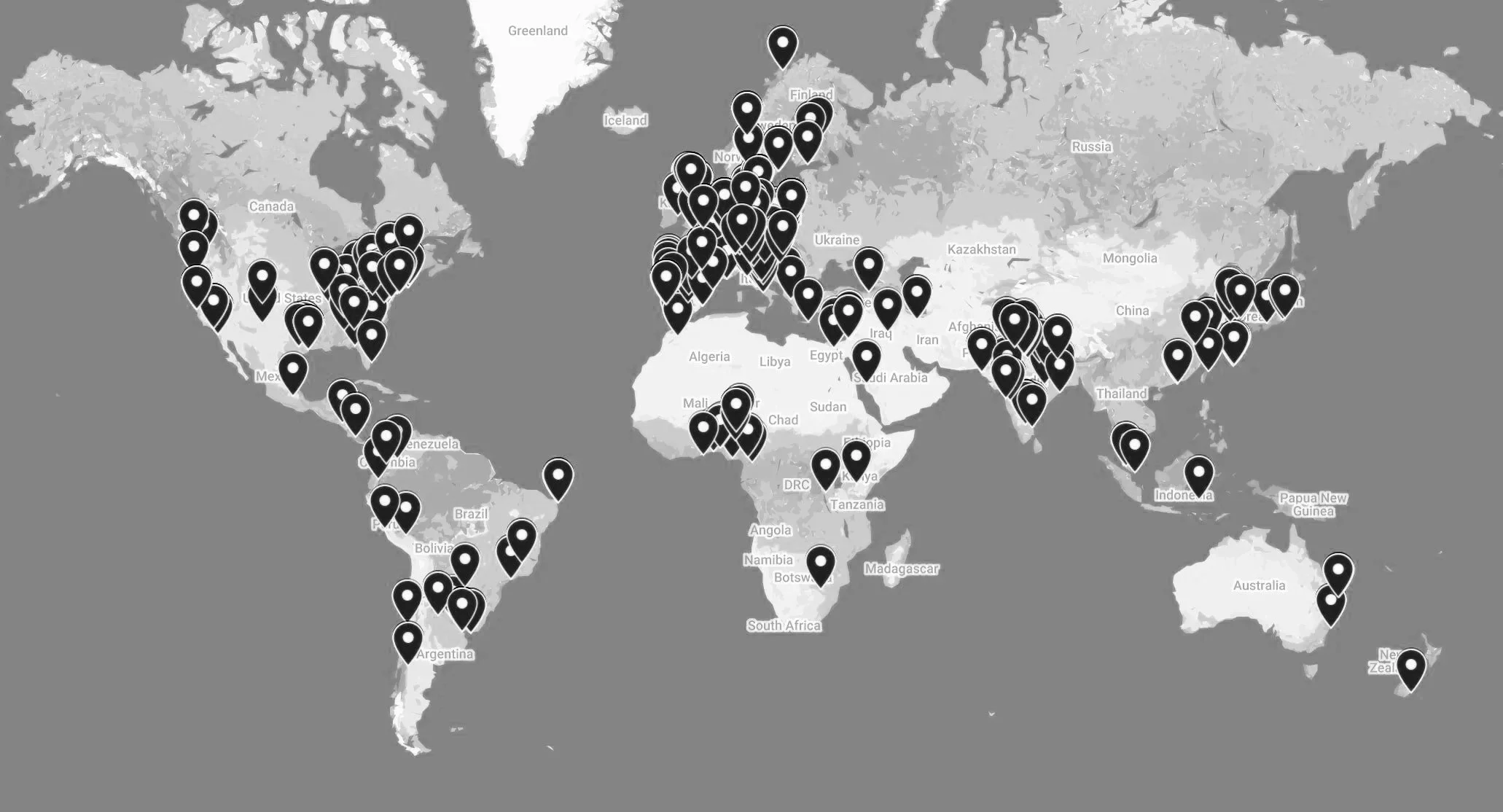
This map is a visual record of our proven logistical and educational reach. To date, we have successfully delivered high-level, hands-on training to every location shown, by shipping physical hardware kits directly to our partners or single individuals.
Having already demonstrated that our hands-on, digital-physical methodology is globally scalable for the scientific community, we are now expanding our mission to secondary school students.
Support the launch of No Black Boxes foundation
We are seeking philanthropic partners, foundations, and aligned supporters who share our belief that understanding technology should not be a privilege, and that early access to foundational knowledge can shape futures.
We invite those partners to help us launch this work at a moment when it matters most. Email us at info@noblackboxes.org.or fill in the form below.
Deliver fully funded courses so students can participate regardless of background. We aim to reach 1000 students per year.
Train educators and mentors to run “No Black Boxes” in local schools and communities.
Expand our open-source curriculum, ensuring it remains current, rigorous, and widely accessible.
Build sustainable pathways connecting learners to academia, research, and emerging technology careers.